Haptics and Telerobotics

Telerobotics combines human intelligence with robotic precision, repeatability and power, so people can manipulate objects in places they can’t safely reach: space, underwater, mines, hazardous sites and operating rooms.

In the IRiS Lab, we develop stability-guaranteed control, immersive haptic interfaces and physical AI that transfers human contact-rich manipulation skills to robots. Our goal is stable, transparent, high-performance haptic and telerobotic systems, from industrial operations to medical procedures.

From human touch to robot skill

We capture how people feel contact, turn those signals into representations a robot can learn from, and transfer the resulting skills back to robots, with haptic feedback throughout.

01 Capture
02 Represent
03 Transfer
Human sensation Haptic feedback to the operator Robot action
01 Capture

Data collection devices

How do we record a human demonstration, including what the person feels?

Handheld haptic data collection

Handheld devices have made robot data collection cheaper, but they don’t record touch. We are building handheld devices that also capture haptic signals, and studying how what a person feels relates to what the sensors observe, so that robots can learn human skills from these recordings.

Haptic Device for Intuitive Teleoperation

General-purpose master devices such as Phantom, Omega or Virtuose limit how intuitive teleoperation can be: the operator loses situational awareness, and their hand-eye coordination doesn’t match the remote robot. We build task- and robot-specific haptic interfaces instead, such as bimanual haptic displays made from collaborative robot arms and modular 3-DoF torque feedback devices that attach to the tip of commercial haptic devices.

Control Methods for Stable Haptic Interaction

Rendering stiff virtual environments is hard for haptic devices. Time discretization, delay, encoder quantization and the zero-order hold of the force command all inject energy, and the contact becomes unstable unless friction or the user’s grip dissipates it.

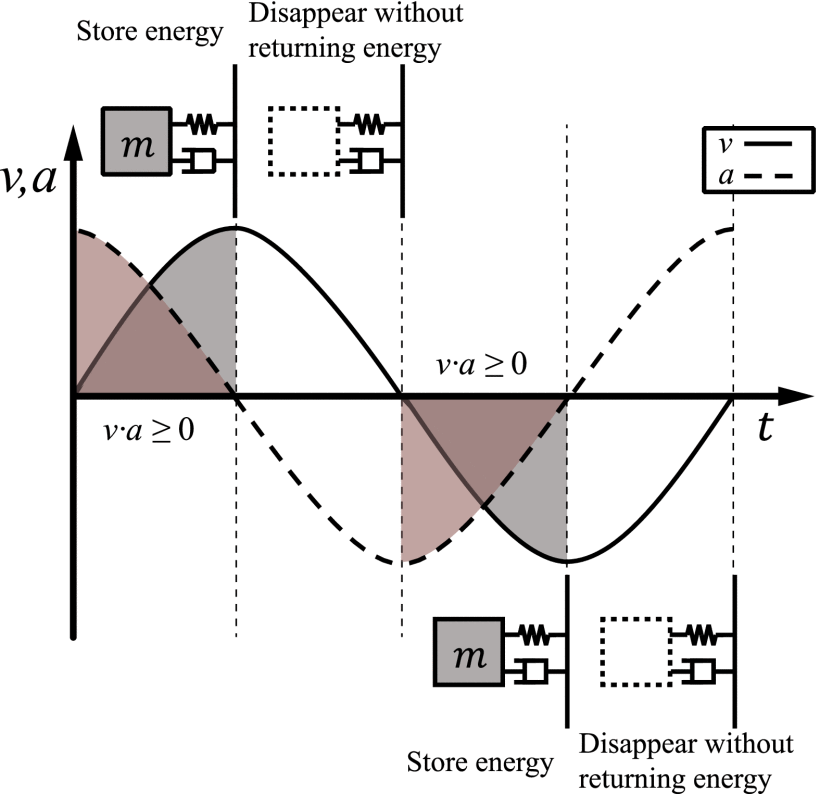
We have proposed several stability-guaranteed approaches, including the time-domain passivity approach (TDPA), input-to-state stability (ISS), successive force augmentation (SFA), successive stiffness increment (SSI) and unidirectional virtual inertia (UVI). We keep extending the range of impedances a haptic system can render transparently.

Unidirectional virtual inertia dissipating energy during contact
02 Represent

Learned haptic representations

How do we turn raw touch signals into something a robot can learn from?

Unified haptic representations

Robot learning still makes little use of haptic data, largely because there is no common way to represent it. We are developing learned haptic representations, informed by physics and by how humans perceive touch, to improve robot learning.

Shared Autonomy and Teleoperation

Direct teleoperation is physically and mentally demanding and needs trained operators. We add autonomy to support them. Virtual fixtures guide the tool, follow a path or keep it out of dangerous regions; we generate them interactively in unstructured environments and adapt how they are rendered to time delay and task type.

At the other end of the scale, the operator guides an autonomous planner through a haptic device, which simplifies motion planning in cluttered environments.

03 Transfer

Human skill learning

How does a robot learn a dexterous, contact-rich skill from these demonstrations?

Tactile human skill learning

Haptic data is underused when robots learn contact-rich tasks. We extract dexterous skills from human demonstrations using high-fidelity tactile information.

Skill Transfer Through Teleoperation

Learning from demonstration trains robot skills with far less data than reinforcement learning or large vision-language-action models need. Our immersive haptic teleoperation system lets the operator demonstrate a task bare-handed, with vision, force and tactile feedback, so the robot learns from the person’s actual motions and intentions.

Lab setup

Equipment

Manipulators

Manipulators

  • 4x Panda, Franka Emika (7-DOF)
  • 2x UR16e, Universal Robot (6-DOF)
  • UR5, Universal Robot (6-DOF)
  • xArm 6, UFACTORY (6-DOF)

Haptic Gloves & Robotic Hands

  • Nova, SenseGlove
  • ROH-AP001, ROHand (Tactile Sensing)
Haptic Devices

Haptic Devices

  • Omega. 7, Force Dimension (1ea / Parallel Type)
  • Phantom Premium 1.5 (1ea / Serial Type)
HMDs

HMDs

  • VIVE XR Elite, HTC Vive (1ea)
  • VIVE Focus 3, HTC Vive (1ea)
  • VIVE Pro, HTC Vive (1ea)
Sensors

Sensors

  • 4x ATI, Axia80 (6-DOF F/T Sensor)
  • 2x Basler ace 2-a2A3840, Basler (RGB / 8.3MP resolution)
  • XR44, Xela Robotics (Magnetic Type Tactile Sensor)
GPU Computing

GPU Computing

  • 2x A6000, NVIDIA
  • 4x RTX 4090, NVIDIA